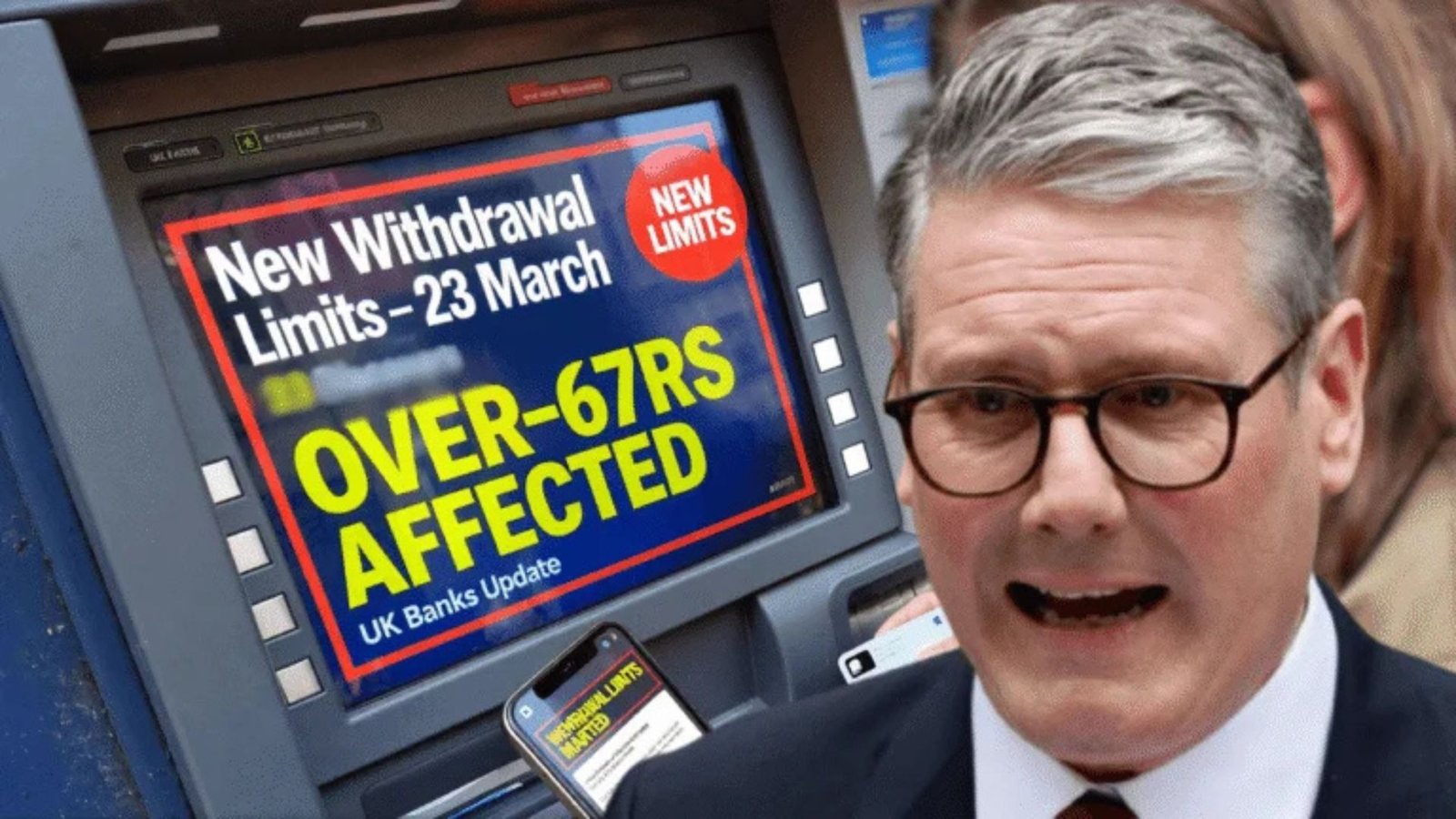
The title “UK Banks Introduce New Cash Withdrawal Limits for People Over 67 Starting 23 March 2026: What You Need to Know” is optimized for search engines. It includes main keywords like “UK banks new cash withdrawal limits,” “over 67,” “starting 23 March 2026,” and related terms people might search for, such as pensioners, seniors, or elderly banking changes.
Recent updates in UK banking focus on improving security against fraud, especially for older customers who are often targeted by scams. Starting around March 2026 (with some changes rolling out from early March or specifically noted around 23 March in various reports), major banks are adjusting rules for cash withdrawals at ATMs and in branches. These apply mainly to people aged over 60–67, depending on the bank.

These changes are not a government-mandated universal limit but bank-specific policies to reduce risk. Many sources mention adjustments for over-60s or over-65s, with some headlines specifying over-67s. The goal is to protect vulnerable customers while ensuring cash access remains possible.
Why Are These Changes Happening?
UK banks have seen a rise in fraud cases, particularly affecting older people. Scammers often trick seniors into large cash withdrawals. To fight this, banks are lowering daily limits on ATMs, adding extra checks for big amounts, and encouraging safer methods like digital payments or in-branch visits with ID.
This aligns with broader efforts to protect access to cash (as supported by the Financial Conduct Authority) while pushing for fraud prevention. It’s not about stopping cash use entirely but making it safer.
Key Changes to Cash Withdrawal Limits

The exact limits vary by bank, account type, and whether it’s an ATM or branch withdrawal. Here’s a summary of common adjustments reported for older customers (typically over 60–67):
- Daily ATM Withdrawal Limits: Often reduced or capped to make large single-day fraud harder.
- In-Branch Withdrawals: May require advance notice or extra verification for amounts above a certain level.
- Extra Security Steps: Things like two-factor authentication (e.g., a code sent to your phone) for larger withdrawals, or mandatory branch visits for big sums.
- Weekly Caps: Some banks set overall weekly limits, with checks needed to go beyond them.
These are not fixed nationwide — they depend on your bank.
Bank-Specific Withdrawal Limits for Older Customers
Here’s a table of reported limits from major UK banks (based on recent updates; always check your bank’s official site or app for the latest, as these can change):
| Bank | Age Group Affected | Daily ATM Limit | In-Branch Daily/Notes | Other Details |
|---|---|---|---|---|
| Lloyds Bank | Over 67 | £1,000 | £2,000 cap; notice needed for larger amounts | Focus on security improvements |
| HSBC UK | Over 60–67 | £800 (personal), £1,200 (premier) | Extra checks for high amounts | Adjusted for fraud protection |
| Barclays | Over 60 | £500 | Standard limit cited for customer safety | May require verification for more |
| NatWest Group | Over 60–67 | £750 | 24-hour notice for over £2,000 | Applies to group banks like RBS |

Note: These figures come from community reports, LinkedIn discussions, and banking update videos around 2025–2026. Some banks may have higher or lower limits based on your account history. Joint accounts often follow the oldest holder’s age.
If your bank isn’t listed, contact them directly — many use similar ranges (£300–£1,000 daily for ATMs in older age groups).
How These Limits Affect Daily Life for Seniors
For many people over 67, cash is still important for shopping, bills, or small expenses. A lower daily limit means you might need multiple trips to the ATM or branch if you need more money at once.
Examples:
- If your limit is £500 per day and you need £1,500 for home repairs, you may withdraw over 3 days or ask for branch help.
- Pension payments (State Pension or private) go into your account as normal — limits only apply to cash withdrawals, not direct debits or card use.
This doesn’t block access to your full money; it just spreads out large cash requests for safety.
What to Do If You Need More Cash Than the Limit Allows
- Visit Your Branch: Many banks allow larger withdrawals in person with ID and sometimes advance notice (e.g., 24 hours).
- Contact Customer Service: Call or use the app to request a temporary limit increase if you have a valid reason (e.g., holiday, medical costs).
- Use Alternatives:
- Debit card for shops (contactless is easy).
- Bank transfers or apps like PayPal for payments.
- Post Office services (some allow cash withdrawals with certain accounts).
- Set Up Alerts: Register your mobile for fraud alerts to stay safe.
- Plan Ahead: Withdraw smaller amounts regularly to avoid hitting limits.
Tips to Stay Safe and Prepared
- Always check your bank’s website or app for personalized limits.
- Never share PINs or codes with anyone claiming to be from the bank.
- If something feels wrong (e.g., unexpected limit drop), report it immediately.
- Consider switching to banks with higher limits or better senior support if needed.
- For those who prefer cash, use trusted family or friends for help if mobility is an issue.
Conclusion
The new cash withdrawal limits starting around 23 March 2026 (with rollouts in March for many banks) aim to protect people over 67 from fraud while keeping banking inclusive. While limits may feel restrictive at first — often ranging from £500 to £1,000 daily at ATMs depending on your bank — they come with options like branch access and verification processes for larger needs.
These changes reflect a balance between security and convenience in a world with rising scams. Stay informed by checking official bank sources, and plan your cash needs ahead. If you’re over 67 and rely on cash, review your account now to avoid surprises. Your money remains fully accessible — just in a safer way.